Cue sppoky music…
3 Likes
I cannot keep up anymore. I was going to say UFOs are now more commonly known as UAP’s and the BBC also got the acronym wrong, it’s AERIAL phenomenon…
Turns out I’m wrong. They changed it from aerial to anomalous in 2022. I didn’t get the memo about the covers on the TPS reports I guess 
1 Like
With all the conspiracy theorists now in charge of the country, I don’t believe anything they say. With all their AI buddies indebted to them, they can procure any kind of “evidence” they need.
1 Like
Well it looks to me like US defence forces drones shooting down a Houthi drone that was headed for Gulf shipping. Depending on the drone make/model, they can have multiple engines, and if you only knock one engine out, they can keep on flying after a fashion.
2 Likes
Ah, yes. There is also the ultimate spin. Make it look like something you want when there is actually a plausible explanation.
2 Likes
I have to wonder if they are spinning up a reason for the name change to Space Command. I forget what the long convoluted version is that they want but, it takes the whole space industry from explore and understand to conquer and defend.
Like we need to pump billions into fighting aliens.
2 Likes
Weeellll…
Depends very much on your point of view. If you don’t absolutely know that it’’s a Houthi drone - and how would you? “Hi, I’m a Houthi drone”. - it’s unidentified. And it’s flying. So it’s an unidentified flying object.
Over the years, that’s mostly why the military have been interested in UFOs - not because they’re spacemen, but because they could be enemy aircraft.
2 Likes
These aren’t normal years
2 Likes
A man is walking down the street with a cake on his head.
“Excuse me, why do you have a cake on your head?”
“It frightens away the elephants”
“But there are no elephants round here”
“Exactly. You see how effective it is?”
Space Aliens are an ideal enemy for the Trump administration. They don’t exist, so it’s an easy win to get rid of them. Like the crime wave in DC.
3 Likes
Combat Forces Command (from Space Command) along with renaming the Department of Defense as the Department of War
I guess when the aliens see these new names, they will be too afraid to attack us
Space is quickly being militarized, not that it was ever too far away. But the whole shift in attitude and leadership has left me to return to using my own telescope.
2 Likes
On the other hand, there is a real fear of foreign powers (for which, read “China”) establishing military / missile bases on the Moon or Mars.
In the event of there being exploitable resources, it would give them control. And missile bases could also threaten targets on Earth.
2 Likes
Please. Let’s bring back Project A119.
If only 1 Soviet beeping satellite was all we had to worry about. Ahhh, the good old days.
2 Likes
There’s a story there. It goes on a while, but I think it’s interesting.
After WW2, radio astronomy was in its infancy, but a small number of enthusiasts were exploring the possibilities. One such was a chap named Bernard Lovell, who worked for the University of Manchester, in England. Lovell had gathered a collection of redundant wartime radar equipment, and set it up in a field in Cheshire, to detect radio signals from space.
Lovell and his team had some success, and by some circuitous routes, persuaded the University to allow him to build the Jodrell Bank radio telescope on the site. Although radar dishes had been seen before, nothing on this sort of scale had ever been attempted. Construction was completed in 1957.
There was uproar. Lovell had spent the University’s entire research budget on what many considered a “white elephant” project. There was no money for anyone else. There was an academic scandal, Lovell was in serious trouble, and it looked for a time as if he would be fired.
Then the Russians launched sputnik. And it turned out that the only person outside Russia who could track it was Lovell, and his Jodrell Bank radio telescope. The Americans had nothing even close.
Overnight, Lovell went from academic pariah to National Hero. His career was saved, he was knighted - he became “Sir” Bernard Lovell” - and the future of Jodrell Bank was assured - seemingly for ever. It’s still there, still chugging away on 70 year old mechanisms.
Jodrell Bank becam a star in its own right - from the late 1950s to the 1970s, it appeared in just about every science fiction film made.
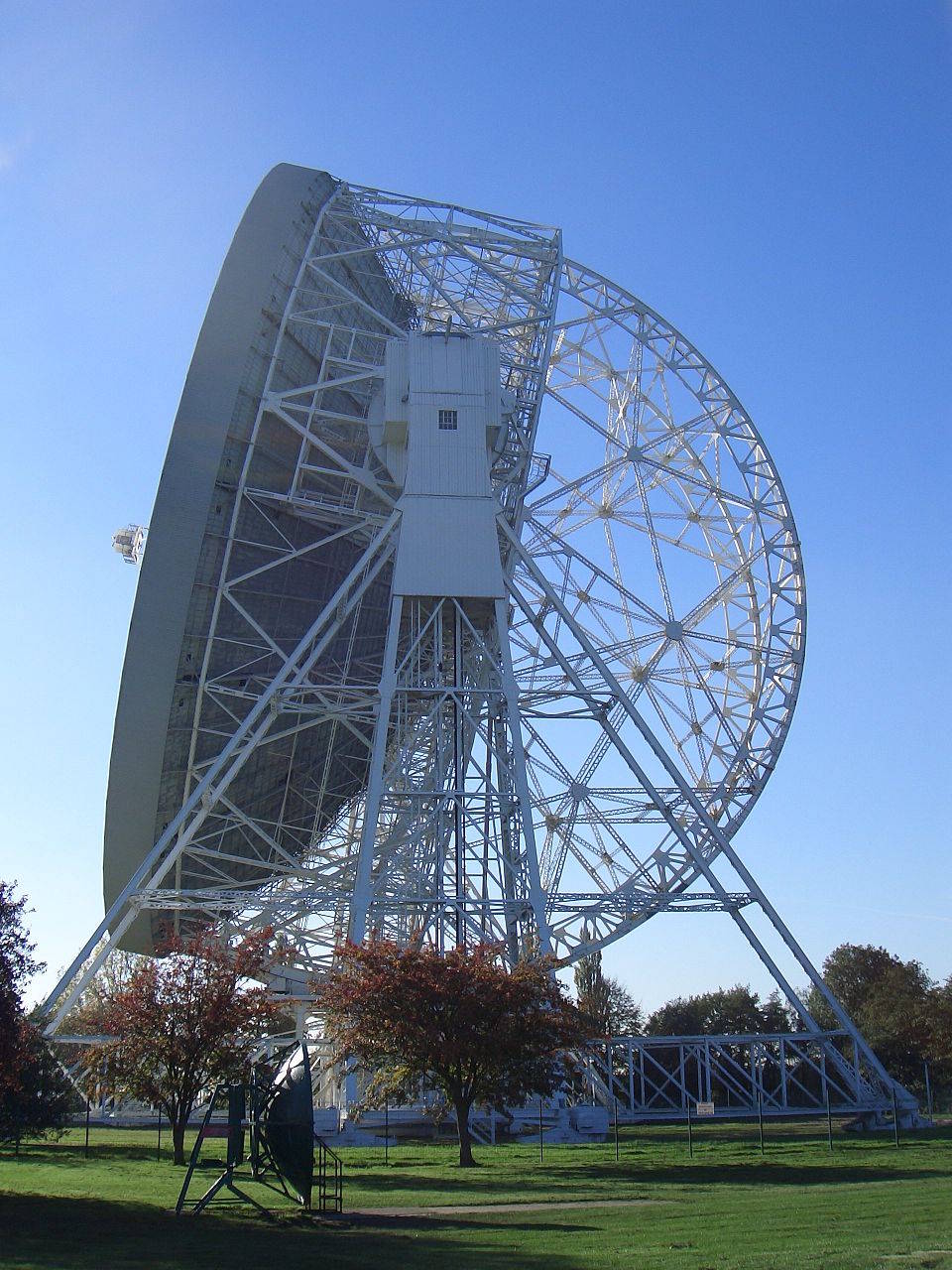
Of course, once the significance of radio telescopes became obvious, other countries raced to build them bigger and better - but Lovell, and Jodrell Bank, were the original and genuine.
3 Likes
I am enjoying the book The Martians by David Baron because it is leading me to old observatories like this one

It is also interesting how he shows that an end of the century climate of despair due to political and economic unrest fueled the Mars craze and the belief in Martians who somehow had a better life and a better world than the one humans were dealing with.
Percival Lowell’s telescope


3 Likes

“killing my neighbours in painful and eccentric ways.”
Everybody needs a hobby.
2 Likes
Missile bases on either would be useless. There’s still no better place to strike anything on earth with a missile from than earths surface.
It would be different for high-powered lasers (on the moon, mars is way too far away for any tactically signifficant interaction), but setting those up on the moon would be so expensive and slow and obvious that their tactical advantage would be doubtful.
3 Likes
Most democratic governments think in terms of 5 or 10 year cycles. That’s one reason environmental action is so difficult to implement - you won’t see significant benefits in your own lifetime.
Some organisations, however, think in a much longer timescale. They have existed for a long time, and are planning now for what may be happening in 300 or 500 years.
I include in this category both the Roman Catholic Church, and China.
I don’t see the Cotholic Church building moonbases (but that’s never been their way - they persuade Catholic countries to do things for them). But China?
If you take a long-term view of what could be achieved with automated machinery and remote mining, manufacturing, and power infrastructure, and project that over, say, the next 100 years, both the Moon and Mars could become industrial powerhouses - and there would hardly need to be any human involvement.
But in order to achieve that in the future, you need to take control now.
2 Likes
The moon, yes. Mars… let’s just say it has a slight logistical problem. I mean, the moon does too, but at least it only applies to getting stuff there. Once you have a decent infrastructure, getting stuff back becomes “economical” (if you can wait a long time for ROI). But Mars? The only role I could see mars play in terrestrial economy is volatiles from phobos and deimos for lunar consumption, and that’s only good until we get serious about NEO mining…
The problem with the moon and military purposes is that you need to have the industrial complex first, and profitable on its own, or it’s going to be too high an expense to justify strategically. Because anything you build on the moon will be highly vulnerable to attack from earth. You don’t need to build lunar missile bases. We can already attack any point on the moons surface from earth if we want to, which is (for now) much cheaper than doing it from the moon…
3 Likes
Once you have automated, self-sustaining production facilities, the whole concept of “economics” goes out of the window.
I accept that we’re a long way from Von Neumann machines, but Von Neumann factory complexes are are already technically within our grasp. Once you accept that the thing doesn’t need to support people, you can build it four miles underground, and not fear attack from anyone.
3 Likes